
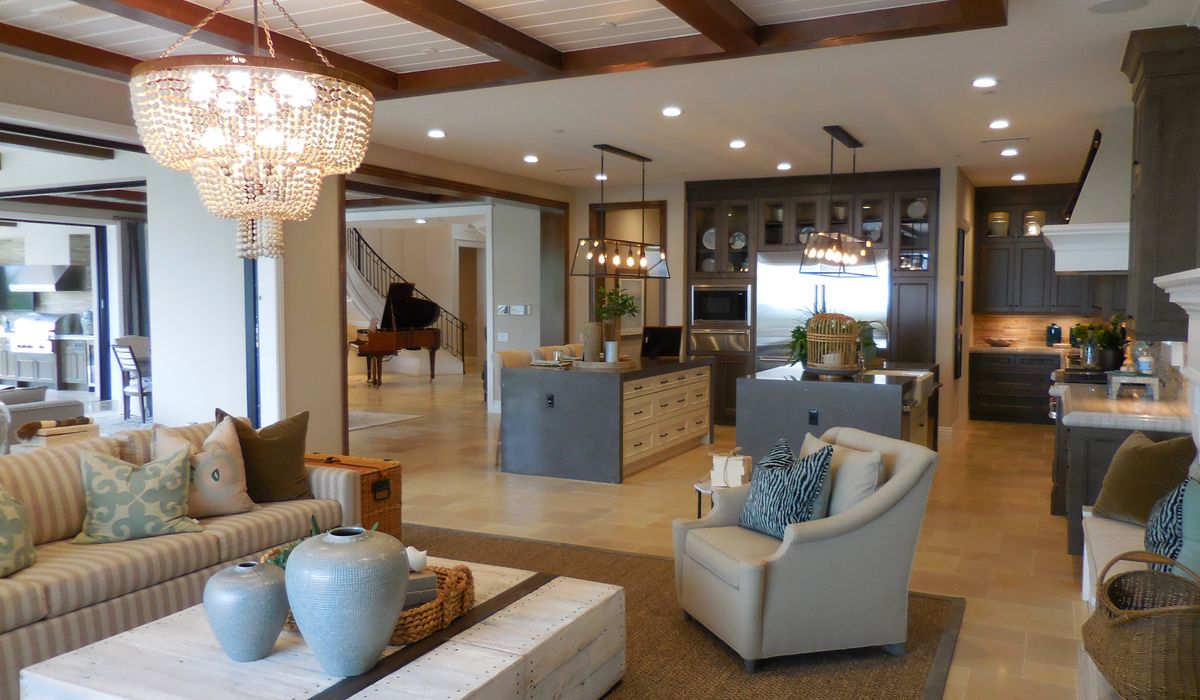
Choosing Warm Lighting for a Seaside Cottage Interior
Why Seaside Rooms Need Their Own Lighting Plan
Coastal cottages are built to catch light. Big sash windows, pale walls, whitewashed boards and a view of the water all conspire to make a room feel bright and breezy at two in the afternoon. The trouble starts at six, when the sun drops behind the headland and that same pale, airy room turns flat and slightly clinical under a single ceiling pendant.
Salt air, damp winters and low beamed ceilings add their own constraints. Fittings corrode faster near the coast, and a cottage with a seven-foot ceiling does not want a chandelier. The answer is not to fight the architecture but to light it in layers, using low-level lamps and dimmable bulbs so the room stays warm and inviting after dark without losing the daytime character that made you fall in love with it.
Here is how to plan it properly.
Build Layers, Not One Bright Ceiling Light
Think of the room as three separate jobs: ambient glow, task light and accent light. In a coastal cottage, the ceiling fitting should be the weakest of the three, not the strongest.
- Ambient: two or three table lamps at waist height or below, spread around the room so no single corner is dark.
- Task: a reading lamp beside the armchair, a small lamp on the kitchen worktop, a bedside light bright enough to read by but not to wake your partner.
- Accent: a picture light over a framed harbour print, a slim lamp on a windowsill, a warm glow tucked behind a fishing basket or a stack of books.
If you keep the ceiling light on a dimmer and run it at about twenty per cent, it becomes a soft wash rather than the main event. Everything else does the work at eye level, which is where low light feels cosy rather than gloomy.
Get the Bulb Right: Warmth and Dimming
Bulb choice matters more than the lamp itself. In a seaside interior, look for a colour temperature of 2700K for a warm white, or 2200K to 2400K if you want the deep, candlelit glow that suits old cottages. Anything at 4000K or above will read as cold and office-like against white walls and pale linen.
Every bulb in the room should be dimmable, even the ones you rarely dim. Mixed dimming and non-dimming bulbs on the same circuit is the quickest way to an irritating flicker.
- Choose dimmable LED bulbs of 4W to 6W for lamps, roughly the old 40W equivalent. A 25W equivalent is plenty for a bedside.
- Check your dimmer switch is LED-compatible. Older leading-edge dimmers often buzz or flicker with LEDs; a trailing-edge dimmer is the better match.
- Watch the minimum load. A dimmer rated for 40W minimum will misbehave with a single 5W bulb. Either add more lamps to the circuit or fit a low-load dimmer.
- Warm-dim bulbs are worth the extra cost in a coastal cottage. They shift from 2700K down towards 1800K as you dim, mimicking a filament rather than going grey and flat.
Shades, Bases and Materials That Suit the Coast
Shade material decides how the light feels. Linen, unbleached cotton, paper and woven seagrass all diffuse a bulb into a soft, even glow. Metal shades, especially polished chrome or gloss white, throw light downwards in a hard cone and tend to look stark against driftwood and whitewashed walls.
For bases, look for ceramic in chalky finishes, painted wood, rope-wrapped columns, reclaimed timber and matte metal. Brass is a lovely coastal choice, but be prepared for it to patina quickly in salty air; if you want a clean finish, choose powder-coated steel or sealed ceramics instead.
A few placements that work in almost every cottage:
- A pair of matching table lamps on a sideboard or console, framing a mirror or a piece of coastal art.
- A slim floor lamp behind the sofa or armchair, angled over the shoulder for reading.
- A small lamp on the kitchen dresser, kept on in the evening so the room reads as inhabited rather than waiting.
- A plug-in wall light or picture light where floor space is tight and you do not want to chase cables into old stone walls.
Practical Wiring for Older Coastal Cottages
Rewiring a period cottage is expensive and disruptive, so work with what you have. Plug-in dimmer switches, available for standard sockets, let you dim a whole corner of lamps without touching the wiring. Extension leads with foot switches or inline dimmers do the same job more cheaply.
Smart plugs and smart bulbs are useful for a holiday let or a weekend cottage: set the lamps to come on at dusk so you never arrive to a dark house. Choose bulbs that default to your warm setting, not a bright daylight preset, or you will spend every arrival fiddling with an app.
Salt air attacks exposed brass and cheap plating, particularly in kitchens and bathrooms. Look for sealed lamp holders, IP-rated fittings where moisture gathers, and consider a wipe of the terminals with a dry cloth each season.
Keeping the Daytime Character Intact
The trick is to leave the lamps off during daylight hours. Sheer curtains, unlined linen blinds and bare windows will do the daytime work, and the low glow only arrives when it is needed. Set lamps on timers to come on at dusk rather than mid-afternoon in summer, and use the dimmer to bring them up gradually through the evening.
In winter, when the sun sets before four, start with one lamp in the corner where you sit and add others as the room darkens. By nine o'clock you should be able to see the shape of the room, the coast outside the window, and not much else. That is exactly how a seaside cottage should feel after sunset: warm, low and quietly inviting, still every bit as airy as it was at noon.
tag: Lighting

James Whitaker Author
Arrange found treasures in glass jars or on open shelves to add gentle coastal detail without making a room feel cluttered.
YOU MAY ALSO LIKE

Simple Ways to Display Driftwood and Shells at Home
Sep 20
10Combine soft whites, muted blues and sandy neutrals to make compact spaces feel lighter, calmer and more connected to the sea.
read more
Creating a Coastal Colour Palette for Small Rooms
Sep 18
10Choose tough grasses, hardy shrubs and wind-tolerant perennials that thrive in exposed coastal conditions while still looking natural and beautiful.
read moreInteriors
-

ERRIC CATONA
Transform a plain glass jar with garden rope and a simple tea light to create a rustic lantern for shelves or outdoor tables.
May 19, 2016 at 5.12 pm
Reply
ERRIC CATONA
Natural fabrics in washed finishes bring texture and comfort to sofas, beds and windows without feeling overly formal or delicate.
May 19, 2016 at 5.12 pm
Reply -
ERRIC CATONA
Check windows, secure garden furniture and store delicate decorations before wet and windy weather arrives along the British coastline.
May 19, 2016 at 5.12 pm
Reply
Lighting
Your email address will not be published.