
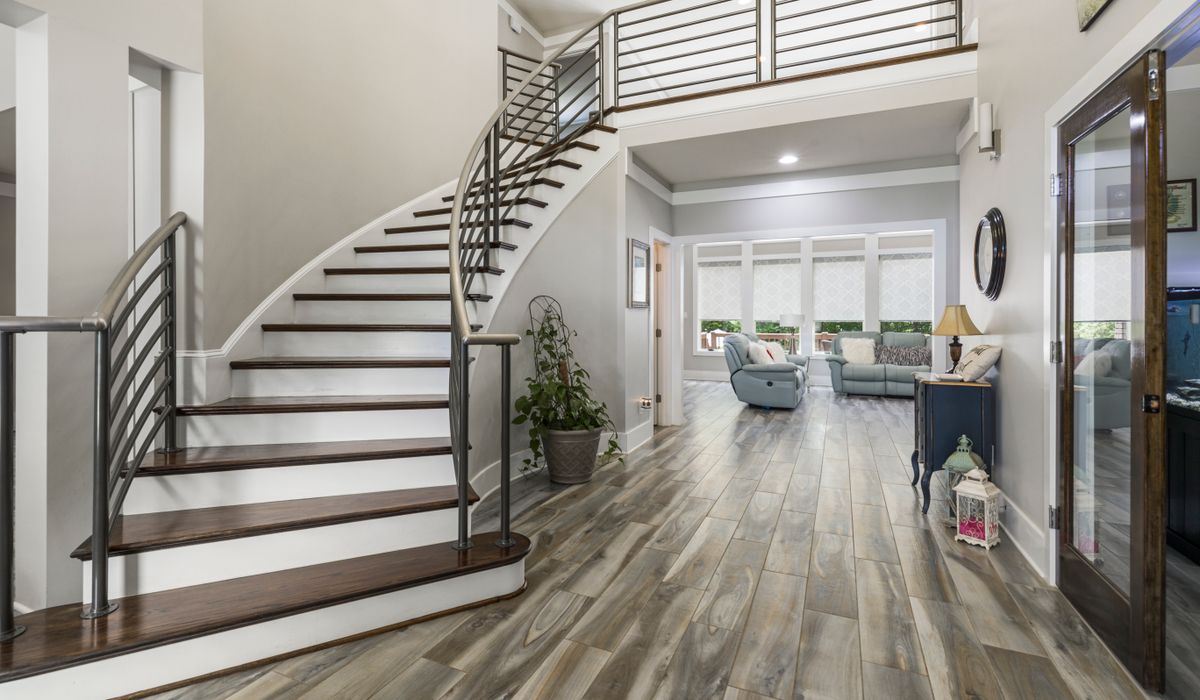
Creating a Coastal Colour Palette for Small Rooms
Why Coastal Colours Work So Well in Compact Spaces
Small rooms have a habit of feeling boxed in, especially in the darker months when natural light is in short supply. Coastal palettes solve this problem beautifully, because they are built on the same principles that make a sea view feel expansive: light, reflection and a gentle shift in tone rather than hard contrast. When you layer soft whites, muted blues and sandy neutrals in the right proportions, a box room can read as airy and restful rather than cramped.
The trick is not simply to paint everything white and hope for the best. A successful coastal scheme is about balance. You want enough light tones to bounce daylight around the room, enough mid-tones to add depth, and just a touch of deeper colour to stop the space feeling washed out. Think of it as the difference between a bright but flat rental and a home that feels genuinely calm.
Start With the Right White for Your Light
Not all whites behave the same way in a small room, and choosing the wrong one is the quickest route to a chilly, clinical feel. Coastal whites tend to have a whisper of warmth or a hint of grey-blue, which keeps them from looking stark under artificial light.
- Warm whites with a touch of cream or oat suit north-facing rooms, where daylight is cooler and flatter.
- Cool, chalky whites with a grey or blue undertone work beautifully in south-facing rooms that already receive plenty of golden light.
- Avoid brilliant, blue-based brilliant whites in small bedrooms, as they can make the walls feel icy once the sun goes down.
Paint the ceiling in the same white as the walls, or one shade lighter, and continue it onto the woodwork. Breaking the scheme with a contrasting trim draws horizontal lines across a small room and visually lowers the ceiling. A single continuous white keeps the eye moving upwards, which makes the space feel taller.
Choosing Muted Blues That Don't Overwhelm
Blue is the anchor of any seaside interior, but in a compact room it needs to be handled with care. Saturated navy on all four walls will shrink a box room dramatically, however lovely it looks in a larger living space. Instead, look for blues that carry plenty of grey or green through them.
Duck egg, eau de nil, soft denim, faded cornflower and pale seafoam are all forgiving choices. They read as colour without shouting, and they sit happily alongside sandy neutrals. If you want a deeper blue, use it sparingly: on a single alcove, the inside of a shelving unit, a painted bed frame or the lower half of a wall below a dado rail. In a small room, one strong blue accent is far more effective than a full room of it.
Consider also how the blue will look in the evening. Blues shift cooler under warm bulbs, so pair them with lamps that cast a soft, amber glow rather than harsh white light.
Layering Sandy Neutrals for Warmth
Pure white and blue alone can feel stark, which is where sandy neutrals earn their place. These are the colours of shingle, wet sand, driftwood and dried dune grass, and they bring the warmth that stops a coastal scheme from feeling like a bathroom.
- Oatmeal and barley for upholstery, curtains and bed linen.
- Pale taupe and mushroom for rugs, which ground a small room without darkening the floor.
- Warm greige for painted furniture, a gentler alternative to bright white.
- Soft terracotta or clay used in small doses, such as a cushion or a ceramic lamp base, to echo a sunset over the sea.
Keep the largest surfaces in the lightest neutral and let the mid-tones appear in textiles and furniture. In a small room, this prevents the palette from becoming muddy, because the eye still reads the walls as bright.
Getting the Proportions Right
A useful rule for compact coastal rooms is roughly sixty per cent light neutral, thirty per cent muted blue, ten per cent accent. The light neutral does the heavy lifting on walls, ceiling and large furniture. The blue sits in curtains, bedding, artwork or a painted feature. The final ten per cent is your accent: a deeper teal, a warm sand, a flash of coral or the green of sea glass.
Repeat each colour at least twice around the room at different heights. A blue cushion on the sofa, a blue ceramic vase on the shelf, a blue stripe in the curtain fabric. This rhythm pulls the scheme together and stops a small space feeling fragmented.
Finishing Touches and Practical Considerations
Texture is what gives a coastal palette its soul, particularly in small rooms where you cannot rely on architectural interest. Add a chunky knitted throw, a linen lampshade, a woven jute rug or a rattan basket to introduce natural variation against smooth painted walls.
Finishes matter too. Choose a durable washable matt or eggshell for walls in busy rooms, and an easy-clean satin for woodwork. In bathrooms and kitchens, moisture-resistant paints in the same muted tones will keep the scheme consistent. Mirrors are your quiet ally: a simple round or arched mirror with a pale frame bounces light and creates the illusion of a window where there is none.
Finally, resist the urge to fill every surface. In a compact coastal room, space itself is part of the palette. A little breathing room between objects lets the soft whites and muted blues do their work, and leaves you with a room that feels lighter, calmer and quietly connected to the sea.
tag: Coastal

Sophie Clarke Author
Choose tough grasses, hardy shrubs and wind-tolerant perennials that thrive in exposed coastal conditions while still looking natural and beautiful.
YOU MAY ALSO LIKE
Planting a Seaside Garden That Survives Salt Winds
Sep 13
10Transform a plain glass jar with garden rope and a simple tea light to create a rustic lantern for shelves or outdoor tables.
read more
Making a Rope-Wrapped Lantern for Cosy Evenings
Sep 10
10Natural fabrics in washed finishes bring texture and comfort to sofas, beds and windows without feeling overly formal or delicate.
read moreInteriors
-

ERRIC CATONA
Check windows, secure garden furniture and store delicate decorations before wet and windy weather arrives along the British coastline.
May 19, 2016 at 5.12 pm
Reply
ERRIC CATONA
Give tired crates a new purpose with chalk paint and rope handles for stylish storage that suits hallways, bedrooms and bathrooms.
May 19, 2016 at 5.12 pm
Reply -
ERRIC CATONA
Select maps, botanical prints and subtle maritime motifs that add character while avoiding obvious anchors and ship wheels.
May 19, 2016 at 5.12 pm
Reply
Lighting
Your email address will not be published.