

Preparing Your Coastal Home for Autumn Storms
Autumn arrives early on the British coast. One week you are eating supper outside in a light breeze, the next the wind has swung round to the south-west and the rain is arriving sideways off the sea. A little preparation now will protect both your home and the seaside touches you have gathered over the years.
Walk the Perimeter Before the First Gales
Choose a dry, still day and take a slow circuit of the outside of the house. Take a torch and a notebook, and work methodically rather than glancing at things from the path.
- Windows: check timber sashes and frames for hairline cracks in the paint, soft patches and putty that has shrunk away. Rake out failed sealant and replace it with an exterior-grade silicone.
- Ironmongery: test every window stay, casement handle and shutter catch. A stay that has seized solid will not hold a pane in a gust.
- Doors: a front door facing the sea will swell and warp. Fit a brush or rubber draught excluder along the bottom and check the threshold for gaps that let in both wind and water.
- Gutters and downpipes: clear leaves and moss now, while you can still feel your fingers. Blocked gutters are the most common cause of damp patches appearing on interior walls in November.
- Render and roof: look for cracked render, lifted flashing and slipped slates or tiles. Small repairs in September cost far less than the ceiling repairs they prevent in January.
Secure the Garden Furniture and Outdoor Décor
Anything lightweight on a coastal patio becomes a projectile once the wind gets underneath it. Cast aluminium, teak and synthetic rattan will all survive the winter if they are stored well; what they will not survive is being lifted over a fence and landing on a neighbour's car.
Move furniture into a shed or garage where possible, stacking chairs and folding tables flat. If something must stay outside, anchor it properly — straps, weights or heavy planters set on top — rather than simply hoping for the best. Bring cushions, parasol canopies and fabric covers indoors, since trapped damp will turn them musty within weeks.
Then work through the smaller pieces: wind chimes, hanging lanterns, bunting, shell mobiles and decorative signage. Take them down and store them. Terracotta pots are prone to cracking in frost, so raise them onto pot feet to let water drain, or move them against a sheltered wall. Finally, check fence panels, gate hinges and the fixings on any outdoor lighting, and make sure wheelie bins have somewhere to hide.
Store Delicate Décor and Soft Furnishings Well
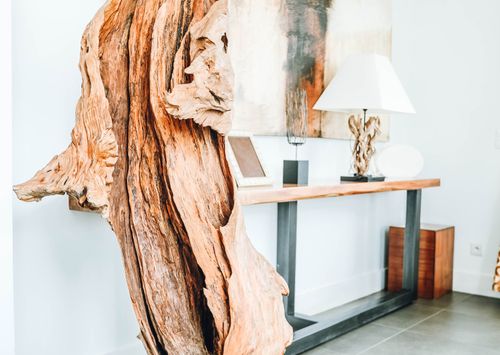
Seaside interiors collect beautiful, fragile things — glass floats, driftwood sculptures, dried sea lavender, paper lanterns, hurricane lamps. Each of these needs a dry, dark, frost-free home for the winter.
Wrap glass and ceramics in acid-free tissue or clean cotton cloth rather than newspaper, which can transfer ink. Store items in breathable cotton bags or cardboard boxes, and avoid sealed plastic bags entirely; in a coastal climate they trap moisture against the very thing you are trying to protect. Keep boxes off a concrete floor by raising them on a pallet or shelf.
Wash and thoroughly dry linen throws, wool blankets and cushion covers before storing them, and slip a lavender bag or cedar block into each box. Never put anything away even slightly damp — you will open the box in spring to a smell that is very hard to shift.
Combat Salt, Damp and Condensation Indoors
Salt spray leaves a fine film on glass, and over time it corrodes metal fixings, curtain poles, lamp bases and drawer handles. Wipe these with a soft cloth and a trace of light oil every few weeks through the autumn.
Condensation is the quieter problem. Warm, moist air meeting cold sea-facing walls creates mould behind furniture and in the corners of wardrobes. Leave a small gap between large pieces of furniture and external walls, keep bathroom and kitchen extractor fans clean, and open windows briefly on dry days to purge the air. A small hygrometer is a worthwhile investment; aim to keep indoor humidity between 40 and 60 per cent, and use a dehumidifier during prolonged wet spells.
Swap In Cosy Autumn Layers
Once the practical work is done, the pleasure begins. Put away the crisp whites, faded linens and sheer curtains, and bring out wool, brushed cotton, sheepskin and chunky knits. Deep navy, kelp green, weathered grey and warm oat tones all sit naturally with a coastal palette while feeling right for cooler months.
Layer your lighting rather than relying on a single overhead bulb — a warm table lamp, a candle inside a storm lantern, a low bowl of fairy lights. Keep a basket of blankets by the sofa so it is easy to reach on a blustery evening, and add a woven jute or wool rug to soften bare boards underfoot. Finally, check that any candles are on stable, heatproof bases well away from curtains and draughts.
Do this work now, on a mild September afternoon, and the first real storm of the season will feel like an invitation to settle in rather than something to worry about.
tag: Seasonal

Sophie Clarke Author
Give tired crates a new purpose with chalk paint and rope handles for stylish storage that suits hallways, bedrooms and bathrooms.
YOU MAY ALSO LIKE
Upcycling Old Wooden Crates into Coastal Storage
Sep 2
10Select maps, botanical prints and subtle maritime motifs that add character while avoiding obvious anchors and ship wheels.
read more
A Guide to Nautical Wall Art Without the Clichés
Aug 28
10Combine jute, wool and washed cotton rugs to soften hard floors and bring cosy texture to bright seaside-inspired living spaces.
read moreInteriors
-

ERRIC CATONA
Look for woven shades, aged metal finishes and adjustable cords to create practical task lighting with a relaxed coastal appearance.
May 19, 2016 at 5.12 pm
Reply
ERRIC CATONA
Paint walls in soft blue-grey, then add white bedding and natural wood furniture for a restful room that feels calm and airy.
May 19, 2016 at 5.12 pm
Reply -
ERRIC CATONA
Plant lavender in free-draining soil and sunny shelters to enjoy fragrant summer borders that cope well with seaside conditions.
May 19, 2016 at 5.12 pm
Reply
Lighting
Your email address will not be published.