
Simple Ways to Display Driftwood and Shells at Home
Start With What You Have
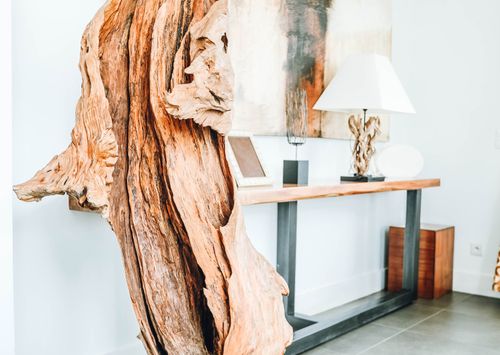
Half the pleasure of a coastal scheme is that it grows slowly. A handful of shells from a blustery walk, a length of sun-bleached timber turned over in the sand — these are souvenirs with a story, and they deserve better than a carrier bag at the back of a cupboard. Before you buy anything, gather everything you have found and spread it out on a table. Sort it into three loose piles: pieces you love, pieces that are interesting but awkward, and the broken bits that are useful as filler. Once you can see the whole collection, you will spot the natural groupings — all the pale greys, all the spiralled shapes, all the flat pebbles — and the arranging almost does itself.
Do give everything a good clean first. Rinse shells in fresh water rather than leaving them to dry with salt still on them, which can bloom into a white crust over time. A soft brush and a little mild washing-up liquid lifts sand from the ridges; avoid anything abrasive on fragile specimens. Driftwood wants a stiff brushing, then a day or two in a dry, airy room. If a piece feels damp or smells brackish, it has not finished drying and should stay out of a sealed jar.
Glass Jars, Bowls and Bottles
Clear glass is the most forgiving display there is. It contains a collection neatly, protects it from dust, and lets you pile things up in a way that feels generous rather than messy. A large kilner-style jar of mixed shells makes a lovely focal point on a console table, and smaller apothecary jars lined up on a shelf create a quiet rhythm.
- Layer for interest. A shallow bed of fine sand or small gravel at the base, then medium shells, then two or three statement pieces near the top reads as a considered arrangement rather than a scoop.
- Keep it loose. Fill jars to roughly two-thirds so there is still air and light moving through the glass.
- Mix textures. Smooth pebbles, ridged oyster shells and a curl of driftwood in the same vessel look richer than one type alone.
- Try open bowls. A shallow stoneware or ceramic bowl on a coffee table lets people pick pieces up, which is far more sociable than a sealed jar.
A single large shell or a beautiful piece of driftwood standing upright in a tall glass bottle is an elegant, unfussy alternative when you only have one treasure worth showing.
Open Shelves and Ledges
Open shelving suits coastal homes because it lets objects breathe. The trick is to treat each shelf as a small composition rather than a storage solution. Group items in odd numbers, vary the heights, and leave roughly a third of the surface empty. That gap is what keeps the look airy instead of cluttered.
On a long shelf, work along it in loose threes: a stack of two or three books, a jar of shells, then a piece of driftwood propped against the wall. Repeat the pattern with small variations so the eye travels. A narrow picture ledge above a desk or in a hallway is ideal for a row of flat pebbles, a few small shells and one longer piece of timber laid on its side. If you have a windowsill, remember that direct sun will fade and eventually crack porous shells, so rotate anything precious or keep it slightly back from the glass.
Trays, Tables and Everyday Corners
A tray is the simplest way to stop a coastal collection drifting across every surface in the room. Choose something with a low lip — weathered wood, woven seagrass, slate — and arrange a small, fixed group inside it: a candle, a dish of shells, one piece of driftwood. Because the tray defines the edges, you can be generous with the contents.
Other spots that work well include the corner of a bath beside a jug of shells, a hallway bench with a bowl of pebbles for keys, and a bedside table with a single large limpet shell used as a ring dish. In a kitchen, a clear jar of shells beside the sink or on a dresser shelf keeps the theme present without turning the room into a beach hut.
Simple Ways to Keep It Calm
The difference between a coastal room and a themed room is restraint. A few guidelines help.
- Stick to a narrow palette. Chalky whites, warm greys, faded blues, sand and driftwood brown. Let colour come from one or two accent pieces only.
- Repeat materials. Glass, untreated wood, linen, rope, stoneware. Repeating three or four materials ties disparate objects together.
- Avoid plastic. Real shells, real stone and real timber look better together, and they will last.
- Edit seasonally. Bring out the palest pieces in summer and darker, heavier finds in winter.
Caring for Your Finds
Shells and driftwood are hardy, but a little attention keeps them looking their best. Dust jars and trays with a dry, soft cloth rather than a wet one. If a shell looks chalky, a very thin coat of clear furniture wax or baby oil brings back its sheen — test on the underside first, and never oil anything you plan to keep in a sealed jar, as it can turn tacky.
Driftwood left untreated will slowly silver in sunlight, which many people prefer. If you want to keep the colour, a coat of beeswax or a matt clear sealant will hold it. Finally, do check the rules where you walk: many British beaches and nature reserves ask visitors not to remove pebbles, shells or timber, so it is always worth a quick look at local signage before you pocket anything.
tag: Décor

James Whitaker Author
Combine soft whites, muted blues and sandy neutrals to make compact spaces feel lighter, calmer and more connected to the sea.
YOU MAY ALSO LIKE
Creating a Coastal Colour Palette for Small Rooms
Sep 18
10Choose tough grasses, hardy shrubs and wind-tolerant perennials that thrive in exposed coastal conditions while still looking natural and beautiful.
read more
Planting a Seaside Garden That Survives Salt Winds
Sep 13
10Transform a plain glass jar with garden rope and a simple tea light to create a rustic lantern for shelves or outdoor tables.
read moreInteriors
-

ERRIC CATONA
Natural fabrics in washed finishes bring texture and comfort to sofas, beds and windows without feeling overly formal or delicate.
May 19, 2016 at 5.12 pm
Reply
ERRIC CATONA
Check windows, secure garden furniture and store delicate decorations before wet and windy weather arrives along the British coastline.
May 19, 2016 at 5.12 pm
Reply -
ERRIC CATONA
Give tired crates a new purpose with chalk paint and rope handles for stylish storage that suits hallways, bedrooms and bathrooms.
May 19, 2016 at 5.12 pm
Reply
Lighting
Your email address will not be published.